
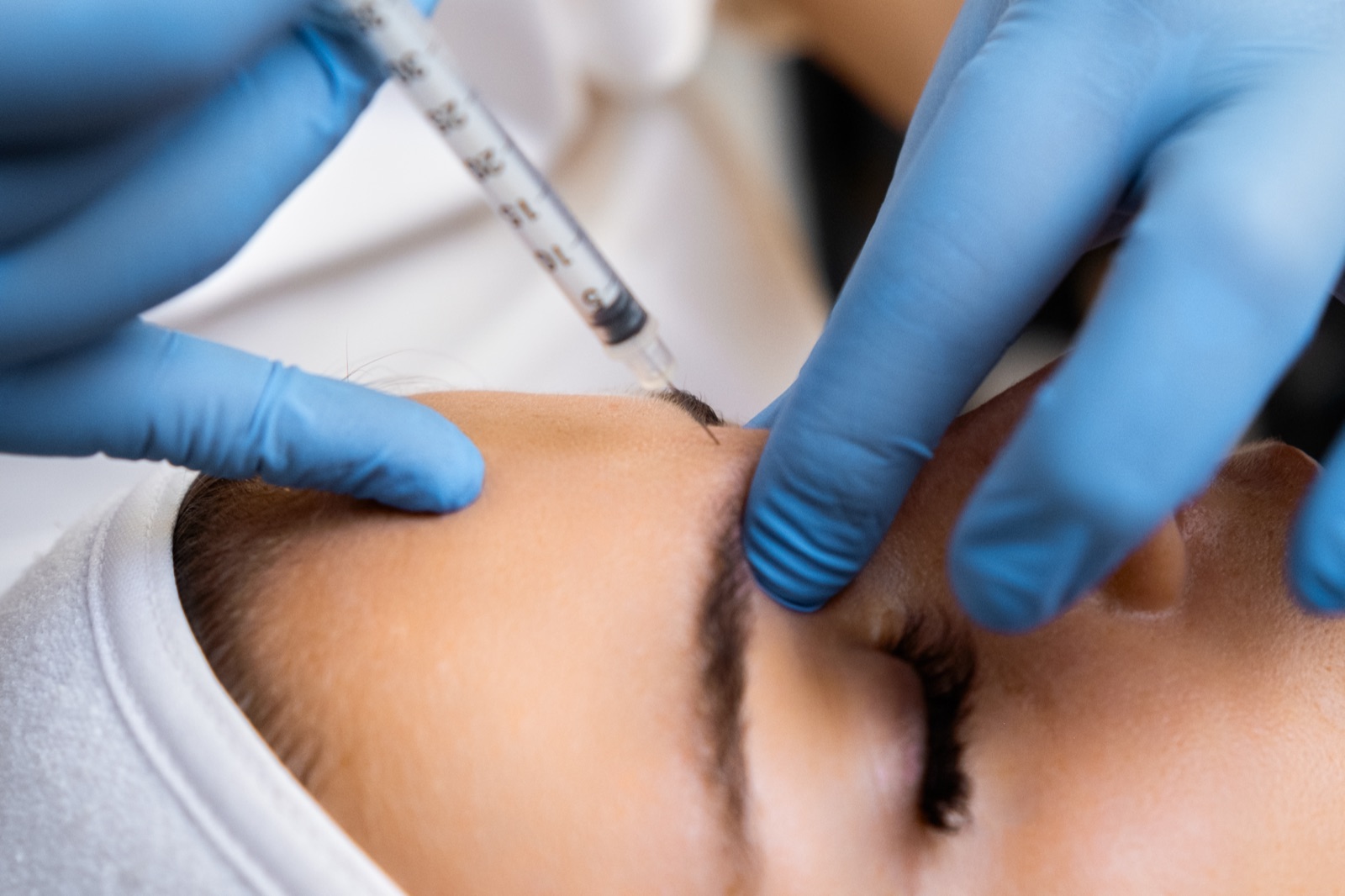
Considering preventative botox in houston? Start with a consultation.
Book Consultation(opens in a new tab)What it treats
- Early dynamic lines that are not yet etched-in
- Patients with strong family history of certain wrinkle patterns
- Patients with high baseline muscle activity (constant frowning, expressive eyebrows)
- A way to learn how your face responds to neurotoxin in your 20s before you need full doses in your 40s
Products used in this treatment: Jeuveau (prabotulinumtoxinA-xvfs), Dysport (abobotulinumtoxinA)
What the evidence actually says
The biological argument is straightforward. Dynamic lines (lines that appear when you move your face) eventually become static lines (lines that stay there at rest) as the skin loses elasticity and the repeated creasing accumulates. If you prevent the contraction, you prevent the crease, and theoretically you prevent the static line that comes from decades of creasing.
The published studies on long-term outcomes from early neurotoxin use are limited. The most-cited example is a 2006 twin study where the twin who got regular neurotoxin treatments looked younger at follow-up than her untreated sister, but that is a single case and confounded by sun exposure and other variables. Subsequent observational data is consistent with the prevention hypothesis but not conclusive.
My honest take: the biological mechanism is plausible and the observational data is reassuring, but the evidence is not as ironclad as the marketing suggests. That said, the downside of treating early is minimal (small expense, small dose, easily reversed by stopping). For patients who want to be conservative about future aging, starting in their late twenties to early thirties is a reasonable choice.
My actual recommendation by age
Early to mid-20s: Probably not yet for most patients. The dynamic lines are too faint and the muscle activity is not strong enough yet for treatment to make a meaningful difference. I would rather work on sunscreen habits, retinol, and sleep.
Late 20s to early 30s: A reasonable starting point if you have visible dynamic lines that bother you. Baby dosing only. Maintenance every 4 to 6 months.
Mid 30s and beyond: The "preventative" framing is less relevant. By then most patients have some static line formation and the treatment is corrective as well as preventative. Standard dosing strategies apply.
What I actually do for younger preventative patients
Baby dosing. Conservative placement. Long intervals (every 4 to 6 months rather than every 3 to 4). The goal is keeping muscle activity slightly suppressed without producing a frozen look. We start with the 11s and forehead almost always; crow's feet only if they bother you, which most early-treatment patients have not yet developed.