Considering brow lift with botox in houston? Start with a consultation.
Book Consultation(opens in a new tab)What it treats
- Heavy upper eyelid appearance from a slightly lower brow
- Outer-brow droop with age
- Tired-looking eye area
- A desire for more open, awake-looking eyes without surgery
- Asymmetric brow height
Products used in this treatment: Jeuveau (prabotulinumtoxinA-xvfs), Dysport (abobotulinumtoxinA)
How a chemical brow lift actually works
Your brow position is the result of a tug-of-war between two sets of muscles. The frontalis on your forehead lifts the brow upward. The orbicularis oculi around your eye and the corrugator/procerus between your brows pull the brow downward. When those down-pulling muscles are relaxed with neurotoxin, the frontalis wins by default and the brow rises slightly.
The amount of lift you get depends on your specific anatomy. Patients with active corrugator/procerus muscles and strong frontalis activity get more lift. Patients with already-lifted brows get minimal change but still soften the surrounding muscle activity.
How dosing differs from a standard upper-face treatment
The trick is treating the down-pullers while preserving the up-pullers. If we over-treat the frontalis (the forehead-lift muscle) along with the brow-depressors, we cancel out the lift we are trying to create. So for a brow lift specifically:
- Full treatment of the glabella (the central frown muscles) - 16 to 22 units typically.
- Conservative or no treatment of the central forehead.
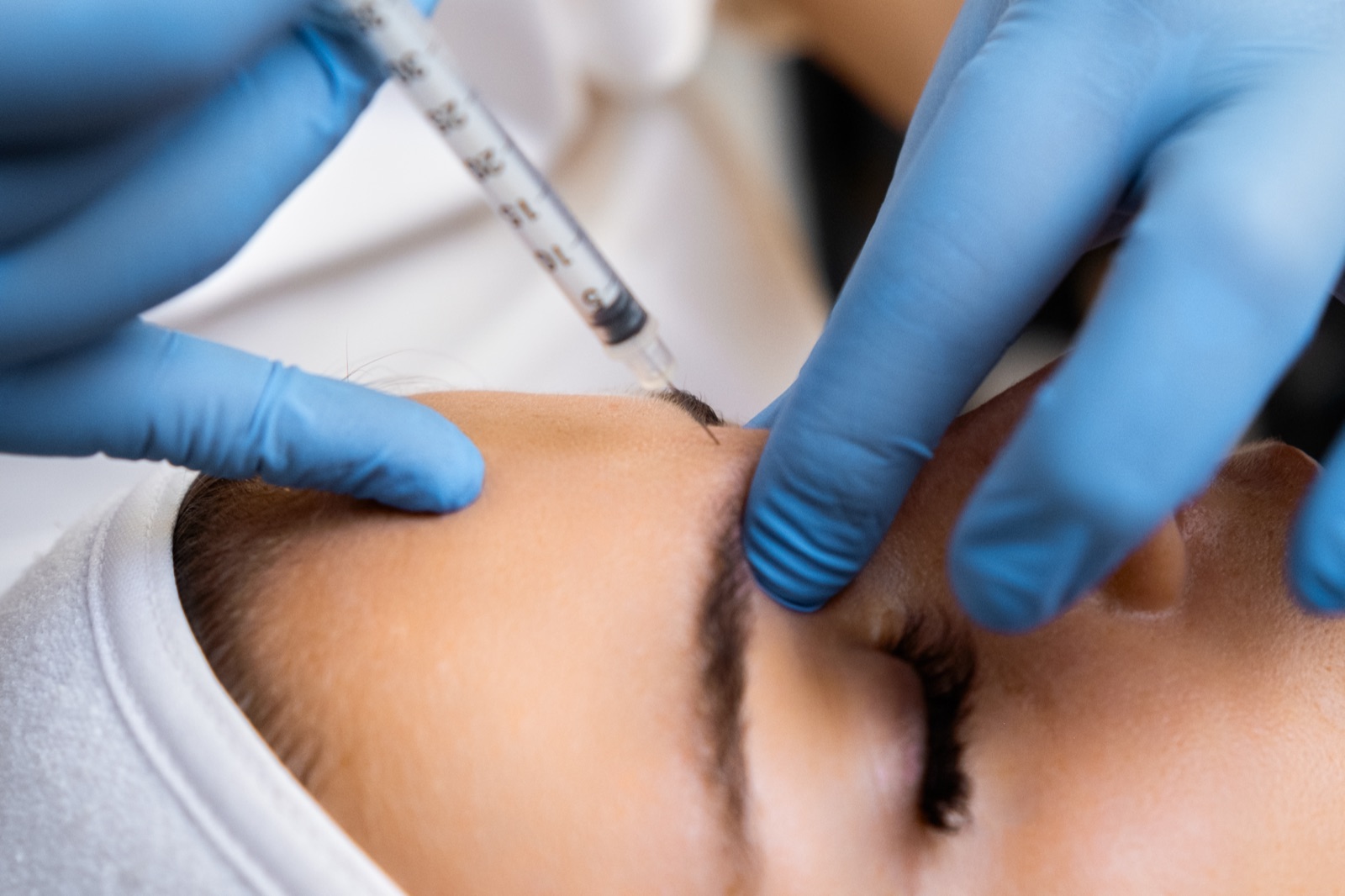
- Small doses placed laterally at the tail of the brow to relax the orbicularis fibers that pull the outer brow down - typically 2 to 4 units per side.
The detail of which muscles to treat and which to spare is what separates a brow lift dosing strategy from a standard upper-face treatment.
How much lift to expect
Realistic expectation: 1 to 3 millimeters of lift at the outer brow. That sounds small written down. In photos, it is the difference between looking tired and looking rested. Patients consistently describe it as their eyes looking "more open" rather than describing the brow specifically.
When surgical brow lift makes more sense
If you have significant heavy upper eyelid skin (dermatochalasis) that is touching your lash line or affecting your peripheral vision, neurotoxin will not fix that. That is a brow-lift or blepharoplasty conversation with a plastic surgeon. I refer patients out when surgical correction is genuinely the right tool.